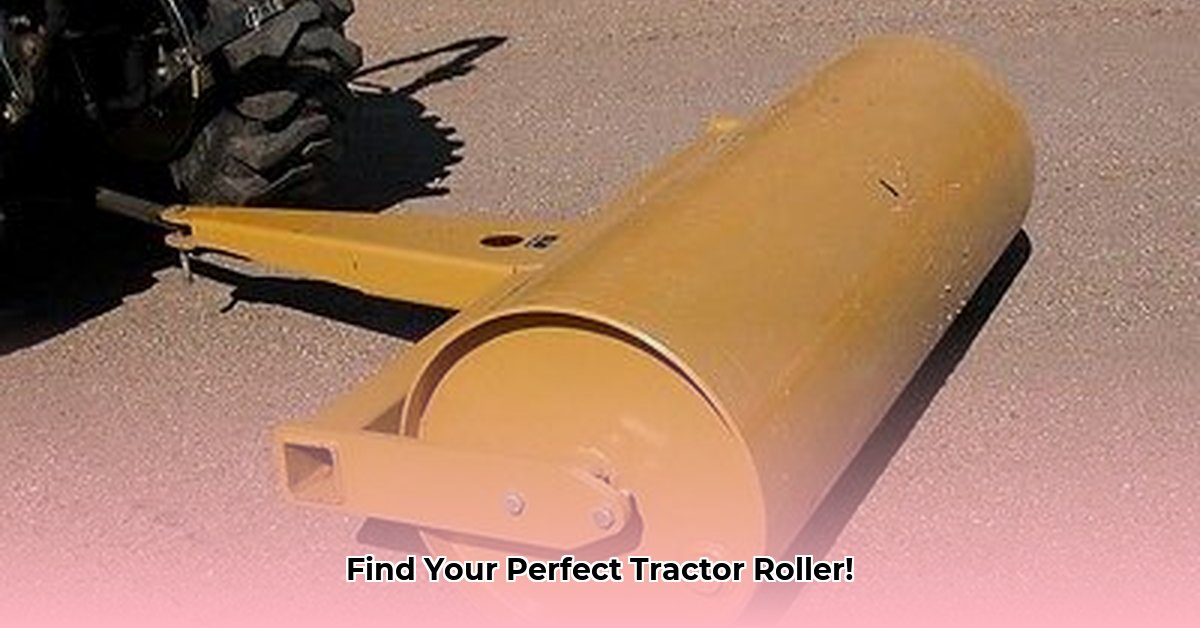
Pull Behind Roller Selection: A Comprehensive Buyer's Guide
Choosing the right pull-behind roller for your tractor is crucial for achieving a smooth, level lawn. This buyer's guide will help you navigate the options, considering factors like weight, size, material, and hitch compatibility to find the best fit for your needs and budget, whether you're a homeowner or a commercial landscaping professional. For more detailed specs on various models, check out this helpful resource.
Key Features and Considerations
Several key features influence the performance and suitability of a pull-behind roller. Understanding these factors will help you make an informed decision.
Roller Weight and Ballast Systems
Roller weight directly impacts compaction and turf smoothing. Heavier rollers provide better compaction, ideal for leveling uneven terrain and preparing seedbeds. Many rollers utilize water ballast systems, allowing for adjustable weight based on soil conditions and project needs. Water ballast offers flexibility but adds the inconvenience of filling and emptying. Do you need the adjustable weight, or will a fixed weight roller suffice?
Roller Diameter and Width
Larger diameter rollers typically provide a smoother finish, while wider rollers increase efficiency by covering more ground per pass. However, wider rollers may require a more powerful tractor for optimal performance. What's the best balance between efficiency and your tractor's capabilities? A smaller roller is more nimble in confined spaces.
Shell Material and Thickness
Steel is the most common shell material, offering durability and longevity. Thicker steel (e.g., 3/8 inch) provides superior strength and resistance to damage, particularly important for heavy use and rough terrain. However, thicker steel increases weight and cost. What level of durability do you require, and what's your budget? Thinner steel (e.g., 1/4 inch) is lighter and cheaper, suitable for lighter-duty applications.
Hitch Type and Compatibility
Ensure your chosen roller is compatible with your tractor's hitch. Common types include 3-point hitches and drawbars. Carefully review your tractor's manual to confirm compatibility and ensure safe attachment. Incorrect hitching poses serious safety risks.
Optional Features
Consider additional features such as wheel kits (for easier transport and maneuverability), adjustable weights, and scraper bars (to prevent soil buildup). These add-ons can significantly enhance convenience and functionality. Are there any optional features that will increase the usefulness of your roller?
Comparative Analysis: Popular Models
This section presents a comparison of popular pull-behind roller models. Note that specific specifications may vary depending on the model and retailer.
| Feature | TurfTime AR-Series (Heavy-Duty) | TurfTime LR-Series (Lighter-Duty) | Brinly-Hardy (Residential) |
|---|---|---|---|
| Shell Thickness | 3/8" Steel (typically) | 1/4" Steel (typically) | Varies; Check Manufacturer |
| Weight Capacity | High | Moderate | Varies; Check Manufacturer |
| Roller Dimensions | Varies; Check Manufacturer | Varies; Check Manufacturer | Varies; Check Manufacturer |
| Water Ballast | Often Included | Often Included | May or May Not be Included |
| Hitch Type | Multiple Options | Multiple Options | Varies; Check Manufacturer |
| Price | Higher | Moderate | Generally Lower |
(Always verify specifications and pricing with the manufacturer or retailer.)
Buying Advice: Selecting the Right Roller for Your Needs
The ideal roller depends heavily on your application.
Residential Use: A lighter-duty roller, such as the TurfTime LR-series or a comparable model from Brinly-Hardy, should suffice for most homeowners. Prioritize ease of use and maneuverability.
Landscaping/Small Businesses: The TurfTime LR-series or a smaller AR-series model might be appropriate, depending on the project scale. Consider the need for adjustable weight and a scraper bar for efficient operation.
Large-Scale Commercial Applications: For demanding, large-scale operations, the heavy-duty TurfTime AR-series is generally recommended for its durability and high weight capacity.
Maintenance and Safety: Ensuring Long-Term Performance and Safe Operation
Regular maintenance is crucial for extending your roller's lifespan and ensuring safe operation.
Routine Maintenance:
Regular Inspections: Conduct frequent inspections for any signs of wear, damage, or cracks, focusing on the shell, axle, hitch, and ballast system (if applicable).
Lubrication: Lubricate moving parts according to the manufacturer's instructions. Proper lubrication ensures smooth operation and prevents premature wear.
Storage: Store the roller in a dry, protected area to prevent rust and damage.
Safe Operating Practices:
Hitching: Always double-check the hitch's secure connection to your tractor before operation.
Weight Limits: Never exceed the tractor's or roller's weight capacity.
Terrain: Avoid operating on uneven or steep terrain beyond the manufacturer's recommendations.
Bystanders: Maintain a safe distance between bystanders and the operating equipment.
Conclusion: Finding the Perfect Fit
Selecting the right pull-behind roller requires careful consideration of several key factors. By understanding your specific needs and evaluating the features of different models, you can choose a roller that optimizes your lawn care efforts and delivers years of reliable performance. Remember to prioritize safety and perform regular maintenance to ensure optimal results.